
About
The question behind Decision Athlete
We devote considerable attention to the decisions people make. We pay much less attention to the physiological state in which they make them.
For founders and other high-consequence decision-makers, judgement is part of the work. The demands are sustained, the consequences can be significant, and the person making the decisions is also a biological system: sleeping, eating, recovering, adapting and responding to stress.
I am interested in what happens when we take that seriously.
Decision Athlete investigates the relationship between physiology, cognition and consequential judgement. The central question is whether decision-making readiness can be understood, in part, as a physiological construct — and whether understanding that relationship can help an individual improve their capacity to make decisions.
It is a question I am pursuing through both clinical practice and doctoral research.
How I came to this question
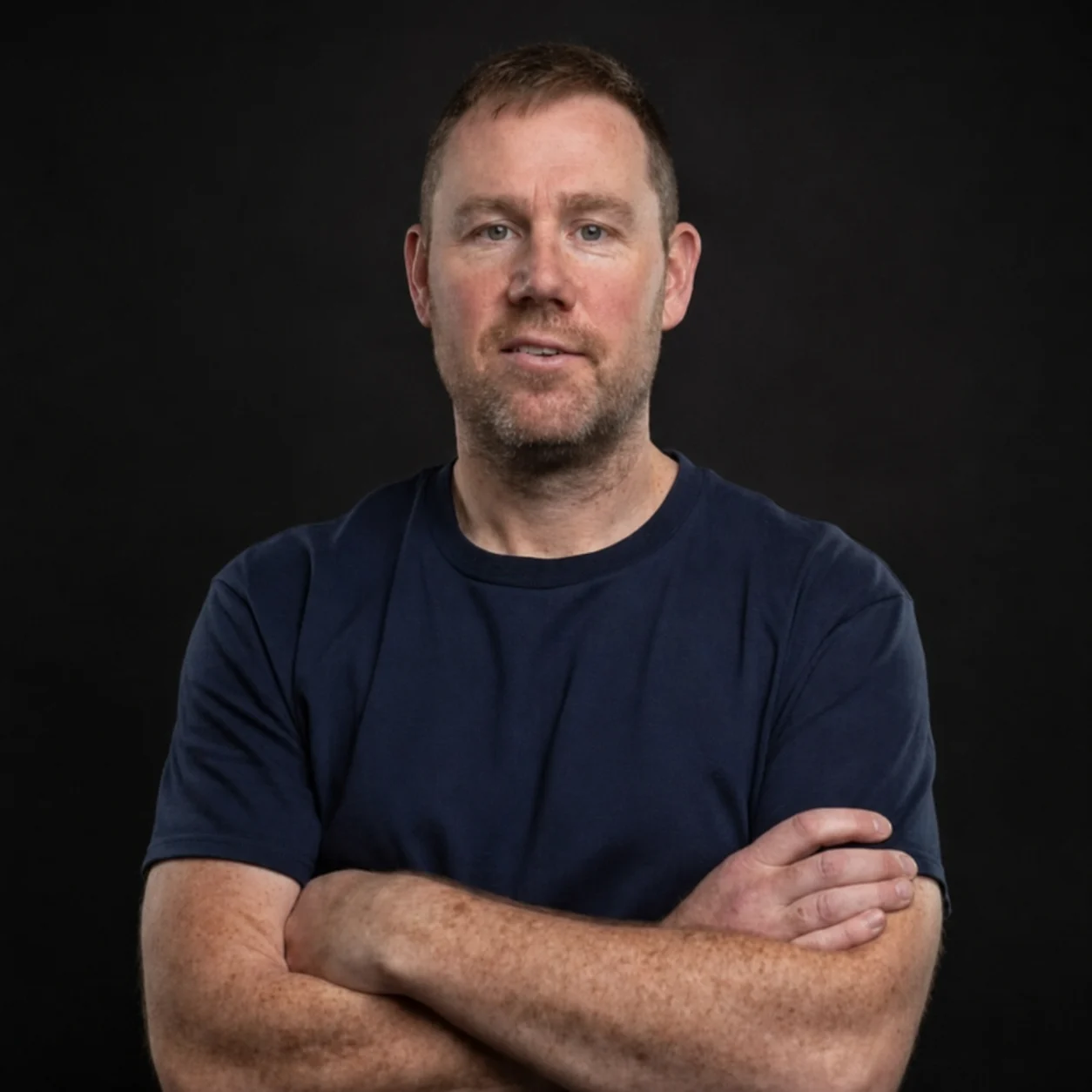
My professional life has moved between the body, physical performance, clinical practice and the study of how people work and make decisions.
I qualified as an osteopath in 2011 and have worked in strength and conditioning since becoming a certified strength coach in 2007. Both disciplines demand attention to the individual: how a person functions, how they respond to intervention, and how changes in behaviour affect the system over time.
My time as an army officer gave me another perspective on performance in environments where responsibility matters. Later, studying innovation at the University of Galway gave me a framework for examining how ideas move from theory into practice.
These experiences did not provide a ready-made answer to the question I now investigate. They helped shape the question itself.
We have increasingly sophisticated ways to measure the human body. We can assess aspects of cognitive performance. What interests me is how we bring those things together, understand what they mean for a particular person, and use that understanding to guide action.
The research
I am undertaking doctoral research in Human Performance and Innovation at the University of Limerick.
My research asks: to what extent can decision-making readiness be determined as a physiological construct?
That question remains open. Decision-making readiness is not yet a universally established measure, and the relationships between physiology, cognition and judgement should not be assumed to be simple or identical across individuals.
Decision fatigue is the best-known idea in this territory, and a good example of how much remains unsettled. I have set out what the evidence does and does not show in a guide to decision fatigue.
The work is to investigate those relationships carefully.
For me, the value of this research is not confined to an academic definition. It is also practical. If physiological state contributes meaningfully to cognitive function, and if that relationship can be understood in the individual, there may be an opportunity to make performance interventions more informed, more precise and more useful.
Decision Athlete is where I investigate that possibility in practice.
What this means for the work
I do not see a blood result, a wearable metric or a cognitive assessment as an answer in itself.
Each is a measurement of something. Its significance depends on the person, the wider pattern, the circumstances and what changes over time. The challenge is to interpret those signals together and determine what, if anything, should be done differently.
That requires more than collecting data. It requires clinical judgement, sustained attention and a relationship in which someone holds the entire picture.
Decision Athlete is built around that responsibility. We measure physiology and cognition, work with the behaviours that influence them, and examine how the individual responds. The process is longitudinal because a single measurement rarely tells the whole story.
The aim is not to optimise a generic human-performance profile. It is to understand the particular person making the decisions, identify meaningful constraints, and investigate which changes make a difference.
The science must guide the work. The individual must remain at its centre.
A question worth pursuing
Decision-making readiness is the question I want to help define more clearly: what it means, how it might be measured, and how an understanding of physiology can contribute to the capacity for consequential judgement.
There is research to do and uncertainty to resolve. That is precisely why the question matters.
Decision Athlete is a practical, individualised investigation into that question, conducted over twelve months with sustained clinical attention.